
How to communicate well with someone living with dementia
In Part 1 of this series, I explored how spoken language, non-verbal communication and the environment all affect communication for someone living with dementia.
I highlighted four important ideas:
-
processing speed slows, so people need much more time to respond
-
holding information in mind becomes harder, so communication needs to be simpler
-
non-verbal communication becomes even more important
-
busy or noisy environments can increase confusion and make communication much harder
In this second blog, I want to look more closely at two of these themes: how old communication patterns often stop working, and why non-verbal communication becomes such an important part of helping a person feel safe and understood.
Why old communication styles often stop working
One of the things I talk about regularly with families is that the old way of communicating may no longer work.
Many couples and families have built up patterns of communication over years or even decades. That may include teasing, sarcasm, logical debate, quick back-and-forth conversation, or even the kind of bickering that feels normal within a relationship.
But as cognitive decline progresses, these familiar patterns can stop being effective.
A person living with dementia may no longer be able to follow sarcasm, keep up with a fast logical discussion, or hold enough information in mind to respond clearly in an argument. Instead, they may simply refuse, say “no,” become distressed, or feel increasingly overwhelmed.
This can be difficult for families, especially because dementia is an invisible illness. In the earlier stages, it can be easy to underestimate the effect it is having on the brain.
The person may still look physically well, but they may now struggle to:
-
retain new information
-
follow longer conversation
-
interpret complex language
-
respond in the way they once would have done
This means carers and loved ones often need to develop a new way of communicating.
Why avoiding disagreement can help
When someone living with dementia disagrees or does not want to do something, they may no longer have the communication skills to explain their reasoning clearly or to follow a logical argument.
Trying to correct, challenge or argue often leads to frustration for everyone.
For calmer and happier communication, two things often help:
-
avoid disagreement where possible
-
find value in the communication itself, even if it is inaccurate or unusual
This does not mean pretending nothing matters. It means recognising that constant correction is rarely helpful and often increases stress.
If something a person says is out of sequence or factually inaccurate, the relationship and emotional connection are usually more important than the detail.
People still take pleasure in communicating, even when the words are confused or the information is not accurate. Holding on to that pleasure matters.
Why non-verbal communication matters even more
As I mentioned in Part 1, non-verbal communication often becomes the main form of communication for a person living with dementia.
In many situations, our non-verbal communication is doing one of two things:
-
helping another person feel connected
-
helping another person feel safe
Human beings naturally respond to each other’s emotional state. We often mirror tone, pace, expression and body language without even realising it.
Someone living with memory loss may be feeling uncertain, confused, socially less confident, or anxious in ways they cannot easily explain. They may be looking to other people for cues about whether things are okay.
This is why non-verbal communication matters so much.
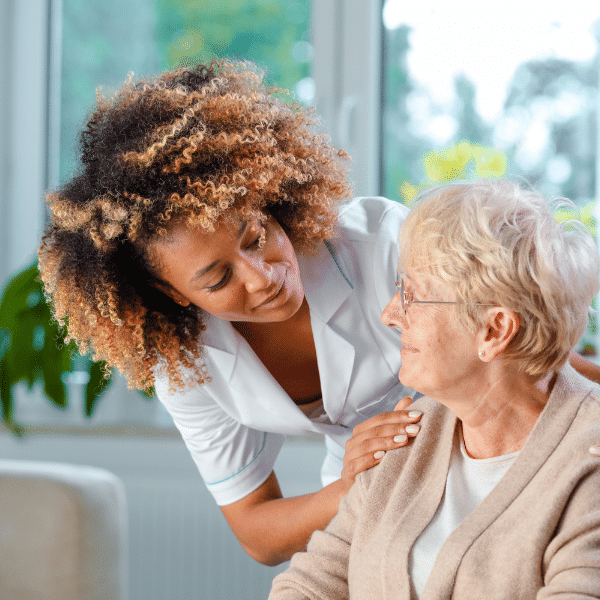
A calm face, a warm tone, open body language and a sense of steadiness can all help the person feel more secure.
What positive non-verbal communication can look like
Positive non-verbal communication may include:
-
warm eye contact
-
a genuine smile
-
a gentle, reassuring tone of voice
-
being calm and comfortable with pauses or silence
-
being at the same eye level where possible
-
open posture and relaxed body language
-
simple sounds of agreement and reassurance
-
gentle touch, where appropriate and welcome
The overall aim is to create a sense that the person is safe, accepted and not under pressure.
How to help someone feel calmer and more secure
Non-verbal communication often helps regulate emotion naturally. But there are also moments when we may need to do this more deliberately.
Some simple actions can help improve emotional regulation and reduce stress. These may include:
-
smiling together or using exaggerated positive facial expression
-
shared laughter, even if it begins artificially
-
calming breath-based exercises
-
gentle humming
-
rhythmic tapping or movement exercises
-
slowing the pace of the interaction and letting the body settle
These things may sound small, but they can have a real effect on mood, connection and a person’s sense of safety.
The important thing is not perfection. It is creating a calmer emotional space.
How families can respond when communication changes
At the heart of good communication is one difficult but important truth: the person living with dementia may no longer be able to communicate in the same way they once did.
This is not a choice, and it is not stubbornness. It is the result of real changes in the brain.
That means the people around them often need to change first.
We may need to:
-
speak more simply
-
slow down
-
argue less
-
correct less
-
reassure more
-
use tone, expression and presence more deliberately
When we do this, we help make the world feel safer, calmer and more manageable.
Final thoughts
There is much more that could be said about communication, but the central message is simple.
Someone living with dementia may feel frightened, confused or overwhelmed in ways they cannot explain. Good communication helps reduce that fear.
It is not only about words. It is about patience, safety, tone, pace and emotional connection.
At Ness Care Group, we offer training and teaching around validation approaches and communicating well with people living with memory loss. If you would like to learn more, please get in touch.