
Written by Jonathan Hanbury, Founder and Clinical Lead of The Ness Care Group. Jonathan has more than 20 years of NHS clinical and leadership experience, with specialist knowledge of dementia, cognitive health and complex care.
What is Cognitive Stimulation Therapy?
Cognitive Stimulation Therapy, often called CST, is a structured group therapy developed by Professor Aimee Spector and colleagues at University College London. Professor Spector developed and evaluated CST through her doctoral research at UCL.
It supports everyday thinking and communication skills, including memory, attention, language, problem-solving, decision-making and conversation.
CST is not a memory test. It is not about putting someone under pressure or expecting perfect answers. A good session should feel supportive, respectful and engaging. People can take part through conversation, music, reminiscence, movement, problem-solving or creative tasks.
At The Ness, sessions feel relaxed and social, but each activity is chosen with a cognitive or social purpose in mind.
That is where skilled dementia facilitation matters.
In more than 20 years of clinical work, I have seen that the same activity can produce very different responses depending on how it is introduced. A facilitator needs to know when to prompt, when to step back and how to adapt without making someone feel they have failed.
Is Cognitive Stimulation Therapy recommended?
Yes. NICE recommends group Cognitive Stimulation Therapy for people living with mild to moderate dementia. The guideline was reviewed in October 2025 and the recommendation was retained.
The NHS describes CST as group activities and exercises designed to support memory, problem-solving skills and language ability.
A 2024 systematic review and meta-analysis of 12 studies using the original 14-session CST programme found significant benefits for overall cognition, language, working memory, communication, depressive symptoms and self-reported quality of life. Ten of the 12 studies were assessed as high or medium quality.
CST does not cure dementia, but it provides structured, evidence-based support that helps people continue using important cognitive and communication skills in an encouraging social setting.
For families, this may mean greater confidence, more structure in the week and regular opportunities to use abilities that support everyday life.
Who is Cognitive Stimulation Therapy suitable for?
CST is best established for people living with mild to moderate dementia. Structured cognitive stimulation can also be valuable for people with Mild Cognitive Impairment or noticeable memory changes.
At The Ness, support may begin with one of our 10-week Active Minds CST courses or through one of our Memory Hubs. The courses provide a structured programme of cognitive and social stimulation. Our Memory Hubs provide ongoing cognitive stimulation and maintenance support, alongside therapeutic activity and social connection as part of a longer-term programme. The Ness supports people experiencing memory changes, MCI and dementia across these services.
We do not look only at a diagnosis. We consider the person’s abilities, communication, confidence, interests and comfort within a small group. We adapt activities to provide an appropriate challenge without making them feel like a test.
For some people, another form of support may be more suitable because of their stage of dementia, health, communication, anxiety, mobility or personal care needs. An introductory visit helps us understand the person and recommend the most appropriate option.
What happens during a CST session?
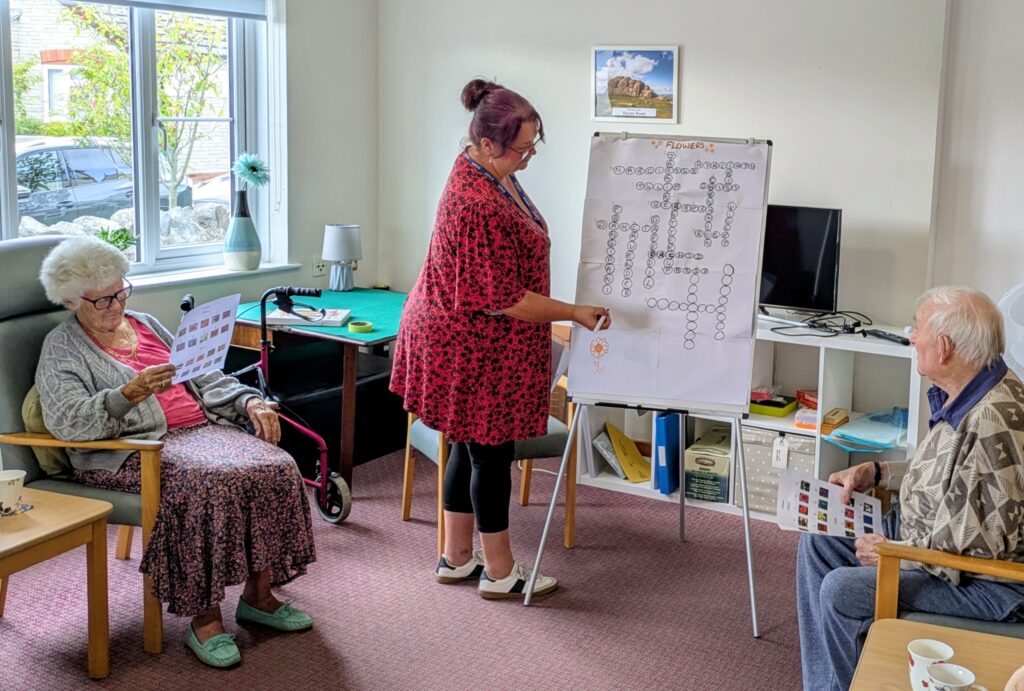
A CST session usually follows a theme and includes activities designed to engage different cognitive and social abilities.
Themes might include music, food, childhood, current events, nature, words, movement or everyday tasks. A session may involve discussion, reminiscence, creative work, group choices or simple problem-solving.
The activity itself is only part of the picture. What matters is why it has been chosen.
A word activity may support language and recall. Sorting objects may involve recognition and decision-making. Talking about a familiar place may engage memory, identity and confidence. Planning a task may involve attention, working memory and sequencing.
The aim is not to get everything right. The aim is involvement, connection and confidence.
How can CST help someone living with dementia?
CST gives people regular opportunities to use memory, language, attention, reasoning and communication in a supported setting.
Dementia can affect confidence as well as recall. Someone may become quieter because they are worried about losing their place, finding the wrong word or being corrected.
A well-facilitated group reduces that pressure. People can contribute at their own pace, express opinions, listen to others and remain part of a group in which their contribution is valued.
The group setting is part of the therapy. Conversation, shared humour, choice and social interaction all matter. The best sessions are structured without being rigid, and purposeful while still feeling warm, enjoyable and adult.
How does The Ness deliver Cognitive Stimulation Therapy?
Cognitive Stimulation Therapy can be delivered in different settings. At The Ness, it forms part of a wider clinically led approach that combines purposeful activity, skilled facilitation and ongoing review.
Our 10-week Active Minds courses provide structured cognitive and social stimulation for people experiencing memory changes, Mild Cognitive Impairment or mild to moderate dementia. Our Memory Hubs provide ongoing cognitive stimulation, therapeutic activity and social support over a longer period.
We plan activities around clear aims. A session might focus on language, working memory, recall, planning, movement or communication. Facilitators observe how each person responds and adapt the level of challenge so that activities remain engaging without feeling like tests.
At our Memory Hubs, we also use nine cognitive targets informed by the UK FIM+FAM framework to track changes over time. This helps us identify patterns and review whether important abilities are being maintained or whether someone’s support needs are changing.
Goal Attainment Scaling, known as GAS, adds a more individual measure by helping us track progress towards goals that matter to the person. This can be particularly useful when small changes in communication, participation or independence are significant.
These measures sit alongside clinical judgement, family feedback and our knowledge of each person. Together, they help us plan, review and adapt support over months and years.
How does The Ness support families?
The Ness provides specialist CST, ongoing Memory Hub support, family guidance and dementia training across Devon.
If you are worried about memory changes in yourself or someone close to you, the first medical step is normally to speak with a GP. You can also contact The Ness while waiting for an assessment or after a diagnosis.
An introductory conversation or visit can help you understand what CST involves and whether a 10-week course, Memory Hub or another form of support may suit the person’s needs.
Find out more about support for individuals, explore our Ness Memory Hubs, or contact The Ness on 01626 774799 or at info@nesscaregroup.co.uk.